
A Mindgasm Documentary
WHAT IS PLEASURE?
The Science of Your Brain's Oldest Reward System
What if pleasure isn't something that happens to you, but something your brain is built to generate on its own? This documentary breaks down how pleasure actually works: the ancient survival system behind it, the hedonic hotspots where feeling is created, the difference between wanting and liking, why extreme experiences produce extreme rewards, and what 2500 years of meditation traditions discovered long before neuroscience could measure it.
The Soundtrack
Every track in this film comes from the Mindgasm App. We collected all of them into one playlist, in the order they appear. Free for all subscribers, and included in the 7 day free trial.
Listen to the playlistPrefer reading? Below is the complete script of the film, chapter by chapter, with all visuals from the documentary. The small numbers in the text link to the scientific sources listed at the end of this page.
The Common Definition
Let's talk about pleasure.
We all know it, and we all want to experience it as often as possible.
If you ask people how they would define pleasure, you'll most likely hear the following: "Pleasure is an experience that feels good. A feeling of enjoyment or satisfaction or something that produces this feeling."
The term is primarily used in association with sensory pleasures like the enjoyment of sex and food.

That definition is everywhere. It shapes the way we talk, the way we think about our own bodies, and the way how we sell things.
Think about the last time something felt really good. The touch from someone you love, or a bite of your favorite chocolate. In that moment, it feels obvious that the pleasure is coming from this person's hand, or the taste of the chocolate.

That's how we experience it. Pleasure as something that is given to us from outside.
But what if I tell you that is not what's actually happening?
Behind the word pleasure sits something far more profound and older. Something that shapes every day of our lives, even though most of us are not aware of it.

An Ancient Survival System
To really understand what pleasure is, let's go back to the beginning.
Evolution built the pleasure system a long time ago as a guide, as a signaling system. A way for our ancestors to know what to seek and what to avoid.1
Eating. Bonding. Learning. And safety.
All of it got rewarded with pleasure. And the message: This feels good. This is safe to do. Do it again!

This system was built for a world of scarcity. A world where food was rare and connection was hard to find. It was built for survival.2
Evolution created a built-in evaluation system based on experience. Planted in our DNA and extended with every generation.

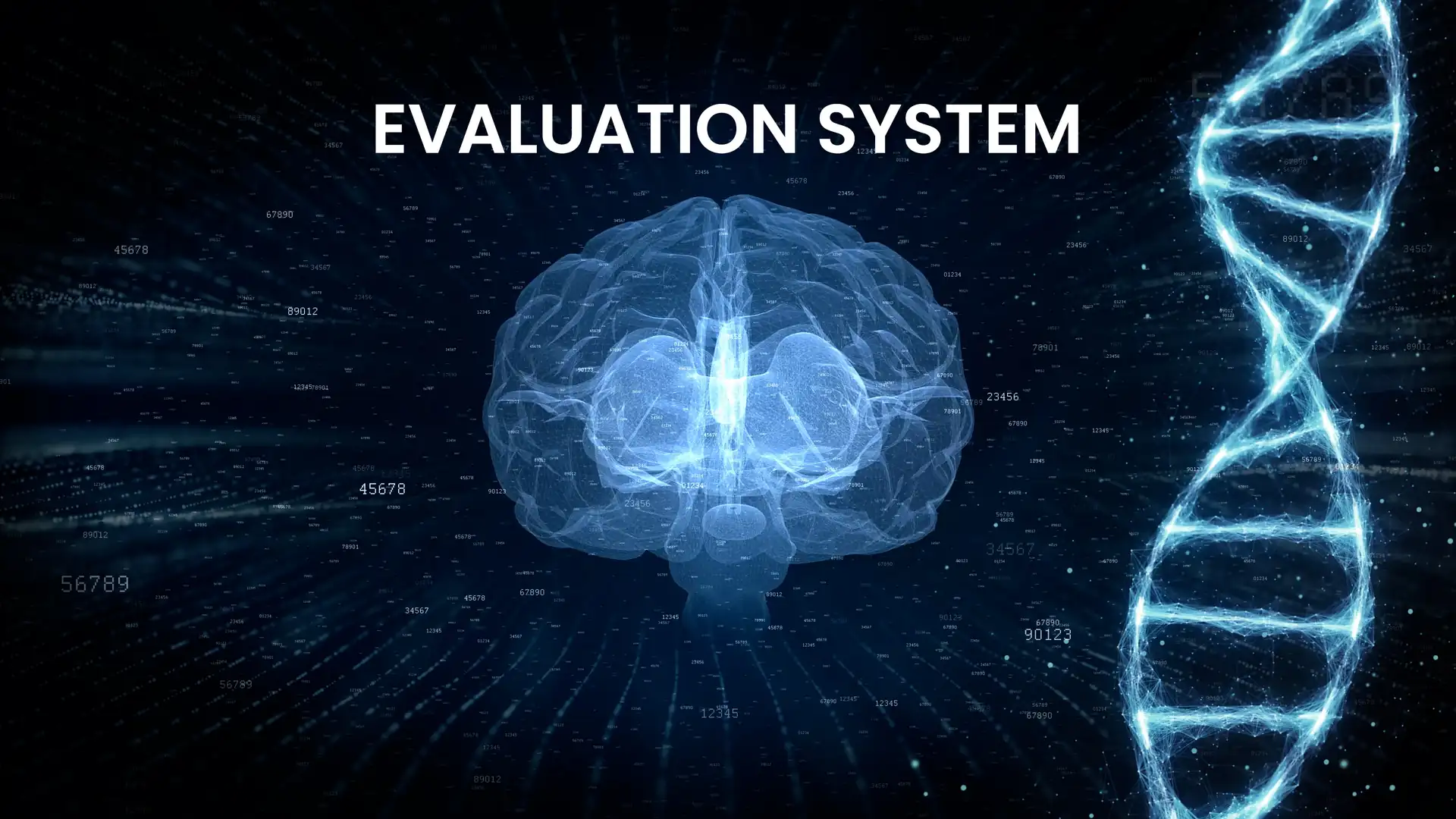
How Pleasure Actually Works
So what is pleasure, actually? If it isn't given to us from the outside, then where does it come from?
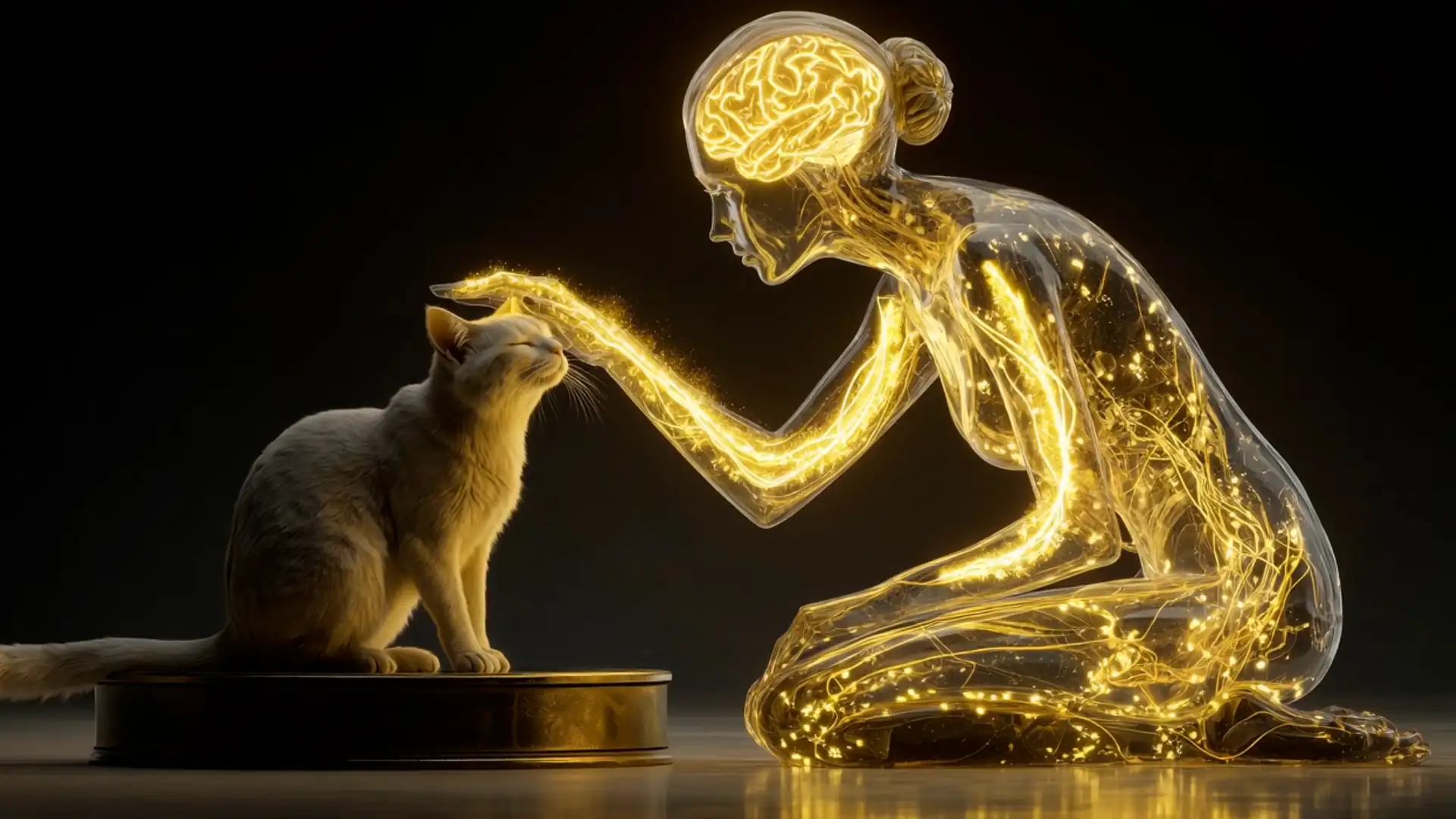
Imagine you touch something soft, like fur or skin. In that first moment, your body doesn't feel pleasure at all. The nerve endings in your skin only register raw data. Pressure. Temperature. Texture. Nothing about this is pleasant yet. It is just information traveling up your nervous system.
The brain receives this raw data and runs it through its evaluation system. It compares the data against everything it has learned over a lifetime and then makes a decision: "This touch feels good".
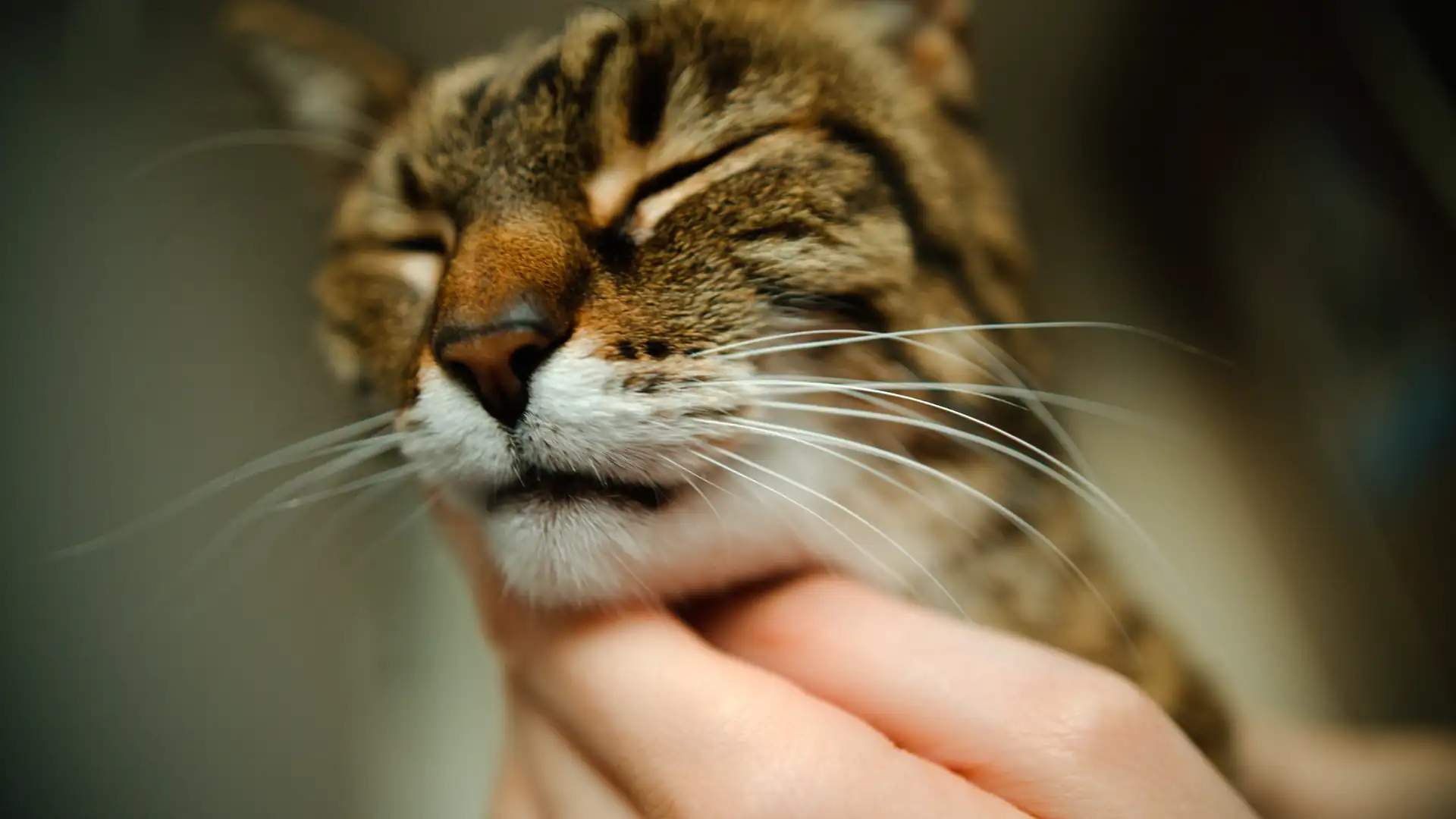
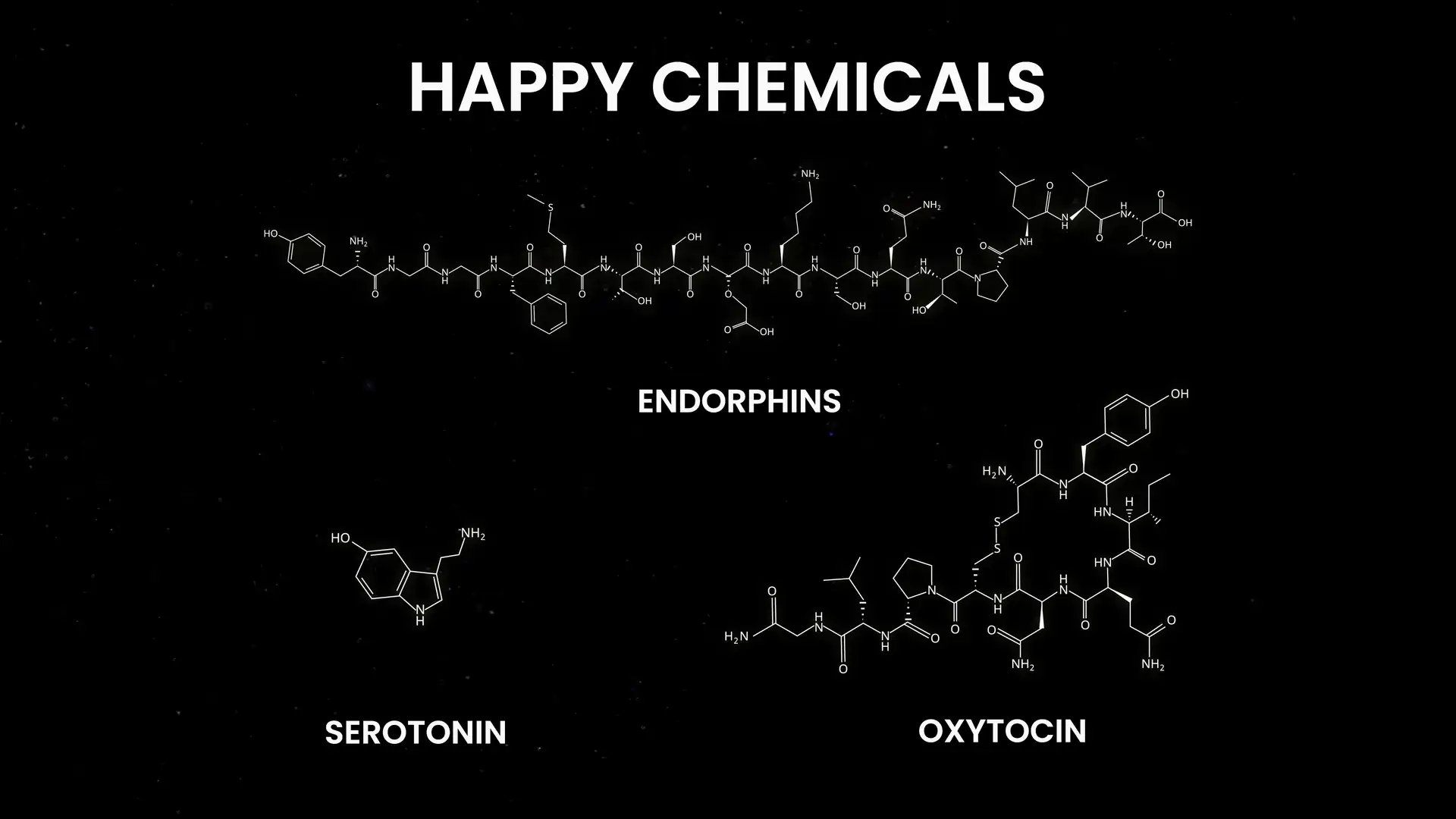
But a decision is not a feeling yet. The brain still has to turn it into one. So it sends a message, written in happy chemicals like endorphins, serotonin and oxytocin.
Neuroscientists have located specific regions in the brain that light up whenever we feel pleasure. And within these regions sit tiny zones, which are called hedonic hotspots.34
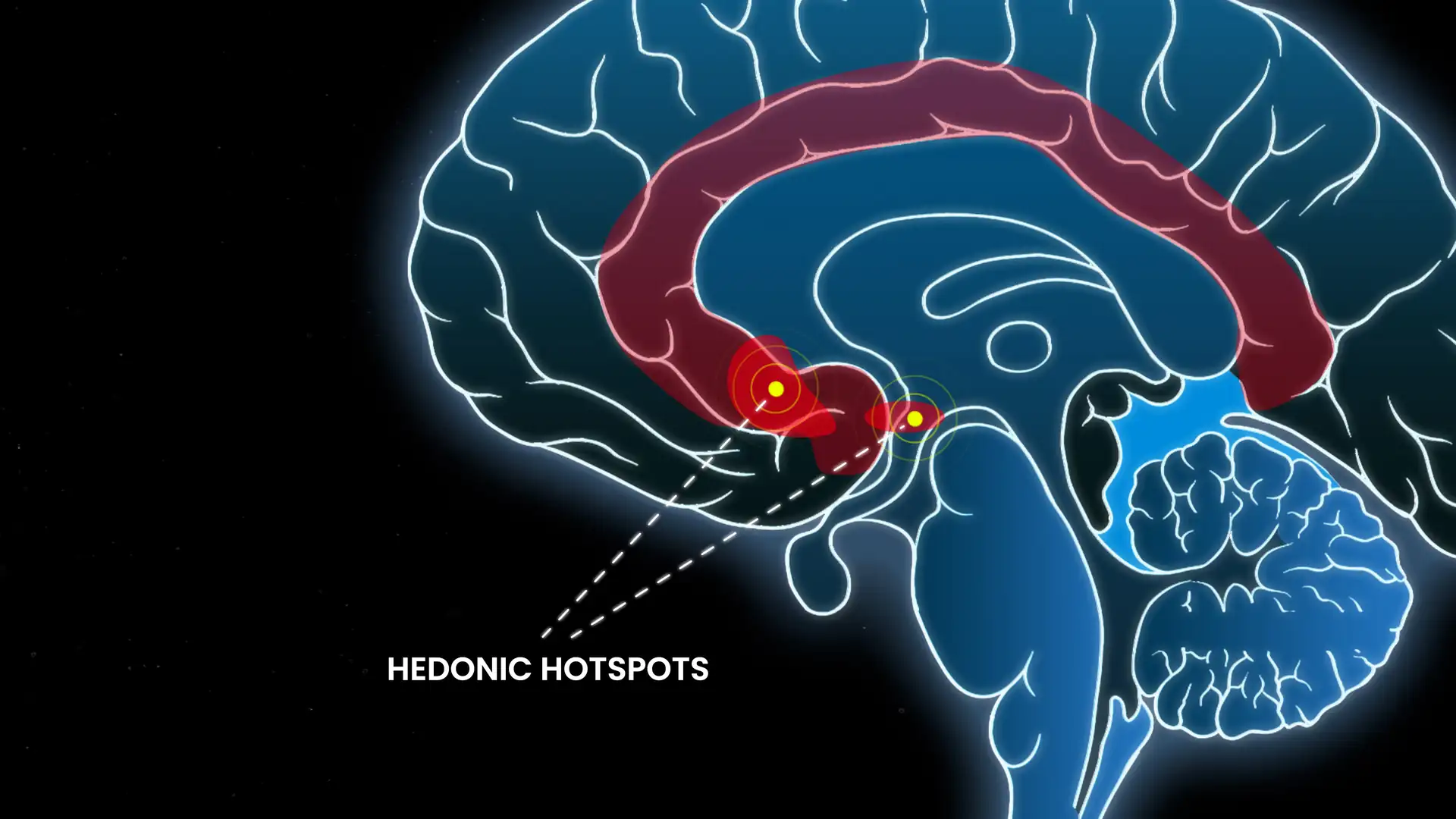
These chemicals dock there, and the moment they do, the neurons in these regions begin to fire in a new pattern. And that pattern is what we experience as pleasure. The moment raw information becomes meaning, becomes a feeling.5

Pleasure Comes From Within
The soft thing you touched, it never contained any pleasure. The outside world was only a trigger. From start to finish, your brain produced it.
A signal your nervous system creates and then sends to itself.
Pleasure is generated entirely by yourself.
But that raises an obvious question. If pleasure always happens inside us, do we always need a trigger to set it off?
In a way, yes. But not all triggers are the same.
The Wanting System
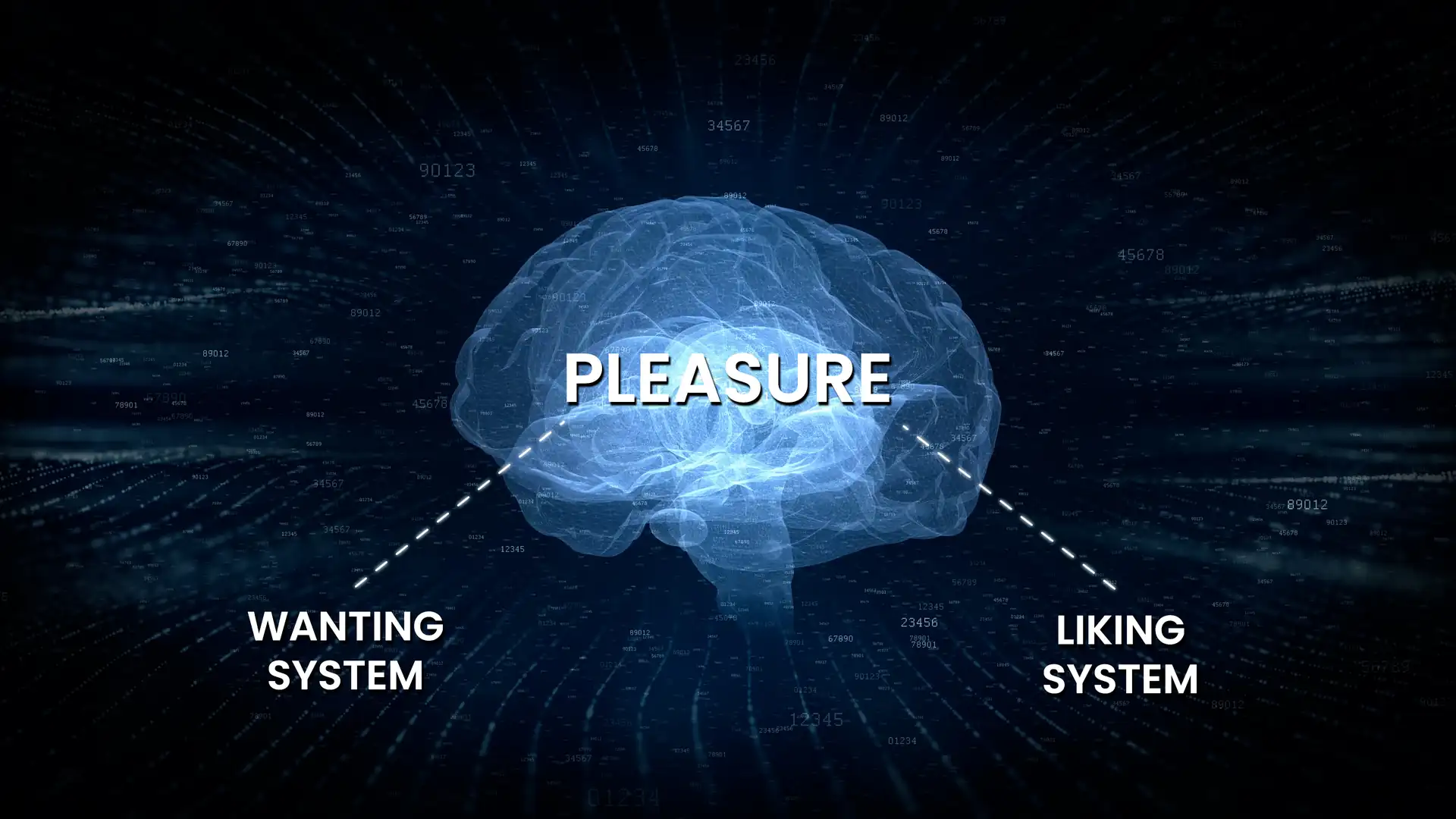
In the 1990s, a neuroscientist named Kent Berridge made a discovery that quietly changed everything we thought we knew about pleasure.
He found that what we call pleasure is actually two different systems. The wanting system and the liking system. These systems are wired into separate parts of the brain and react to completely different kinds of triggers.68
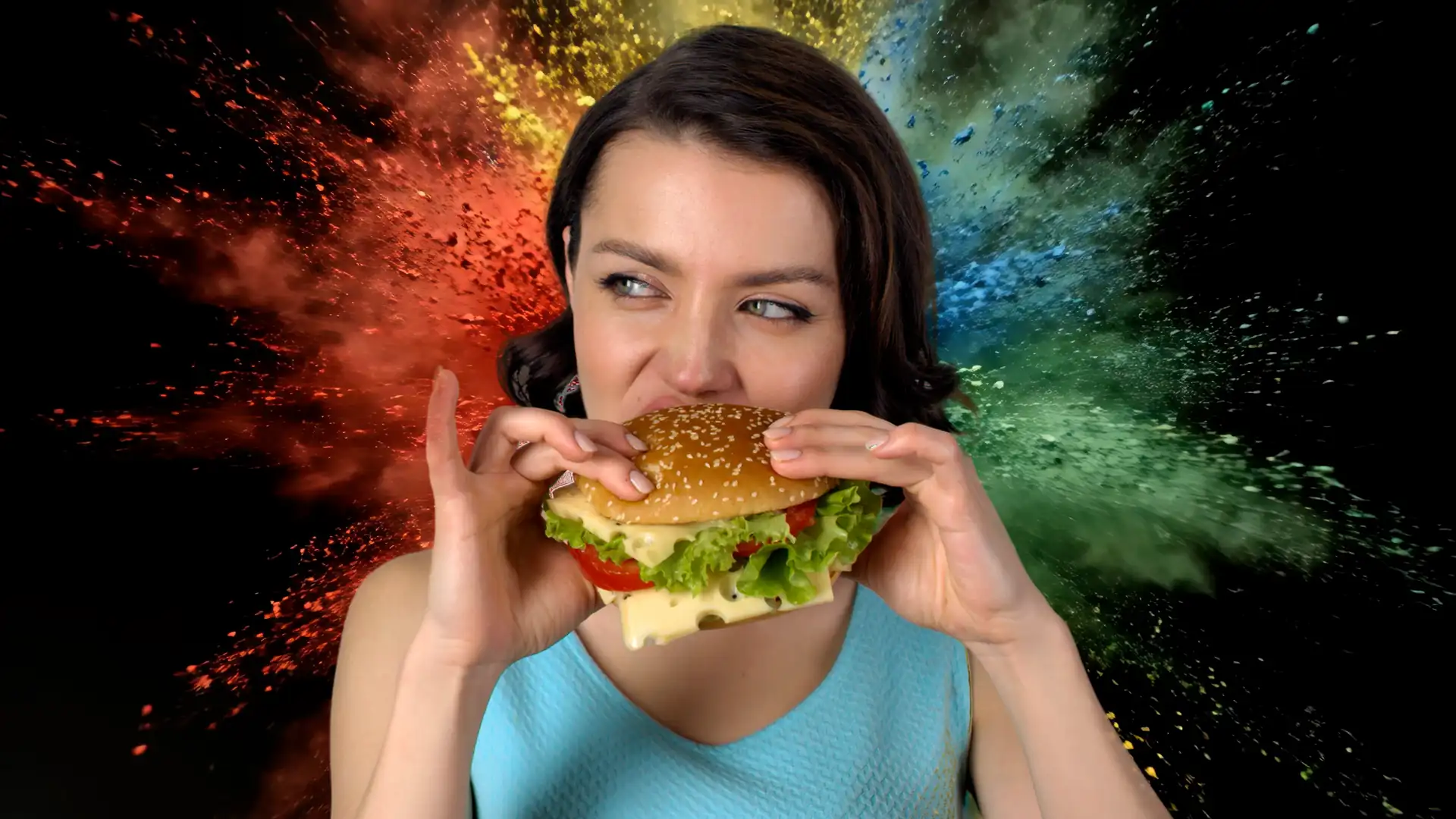
Some triggers are designed to hit fast. Like a notification on your phone. The next bite of junk food. A scroll through social media, or a quick visit on your favorite adult site.
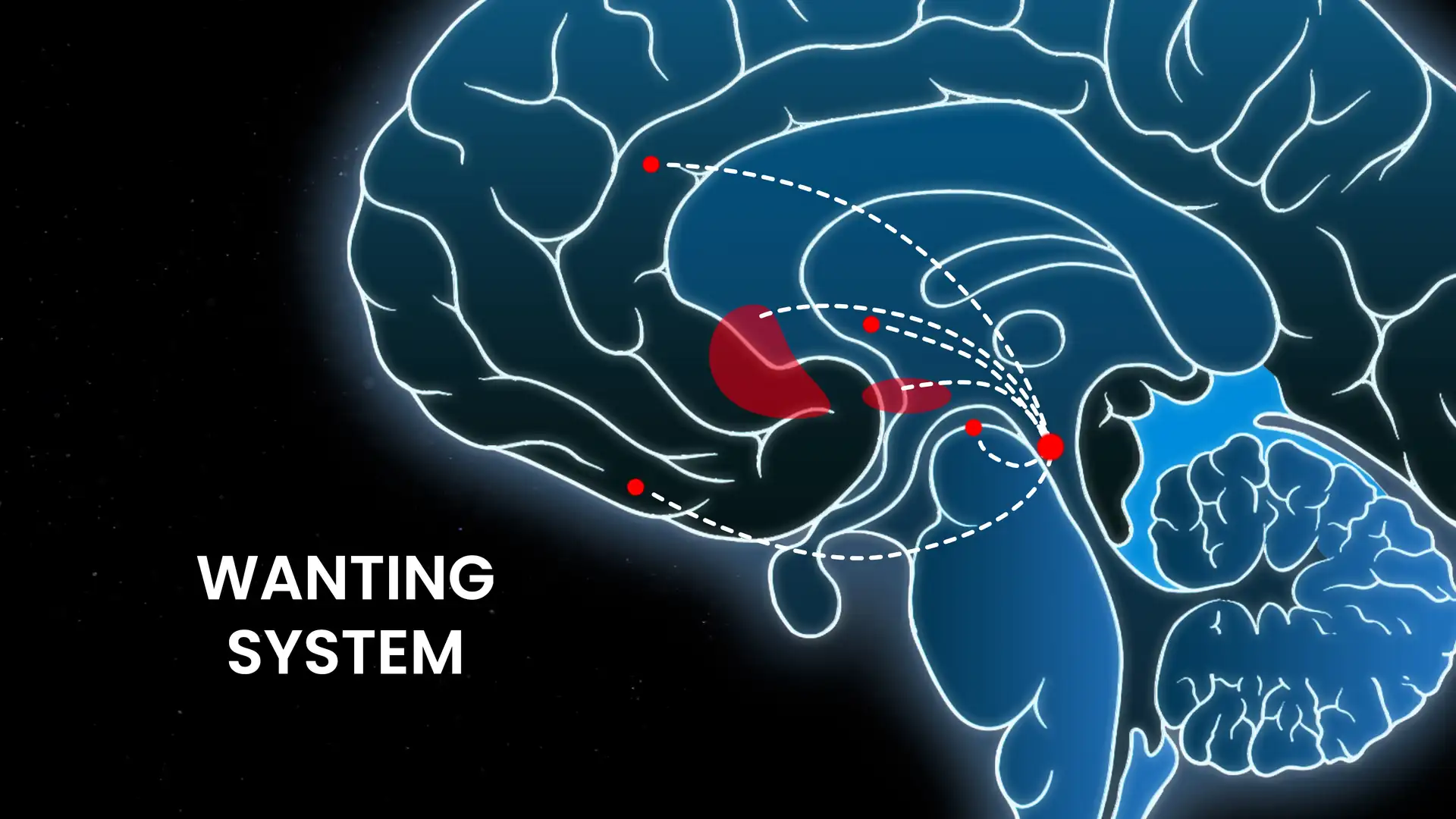
These triggers run almost entirely on small hits of dopamine, produced in a small area deep inside the brain. From there, it spreads through a network of regions that together form the wanting system.7
Dopamine creates the urge to get something. The excitement of the unknown. The anticipation of the pleasure you are about to feel.
But this form of pleasure is superficial. The moment the trigger stops, the feeling is gone.
That is why two hours on social media can pass and leave almost nothing behind.


The modern world is designed to hijack exactly this system. Our attention has become the most valuable currency, and almost everything around us is designed to claim it. And we all play along because it is the easiest and fastest way to feel pleasure.
What these triggers and the wanting system do not produce is real, lasting enjoyment.
The Liking System
Other triggers work very differently. They activate the second pleasure system in your brain. The liking system.
Think of the deep high you feel after physical training, when your body keeps glowing for hours.1112
So does intimacy with someone you trust, where a quiet warmth remains long after the moment is over.
A piece of music that lets you forget everything around you.
Or simply an evening with friends where time disappears and laughter feels effortless.
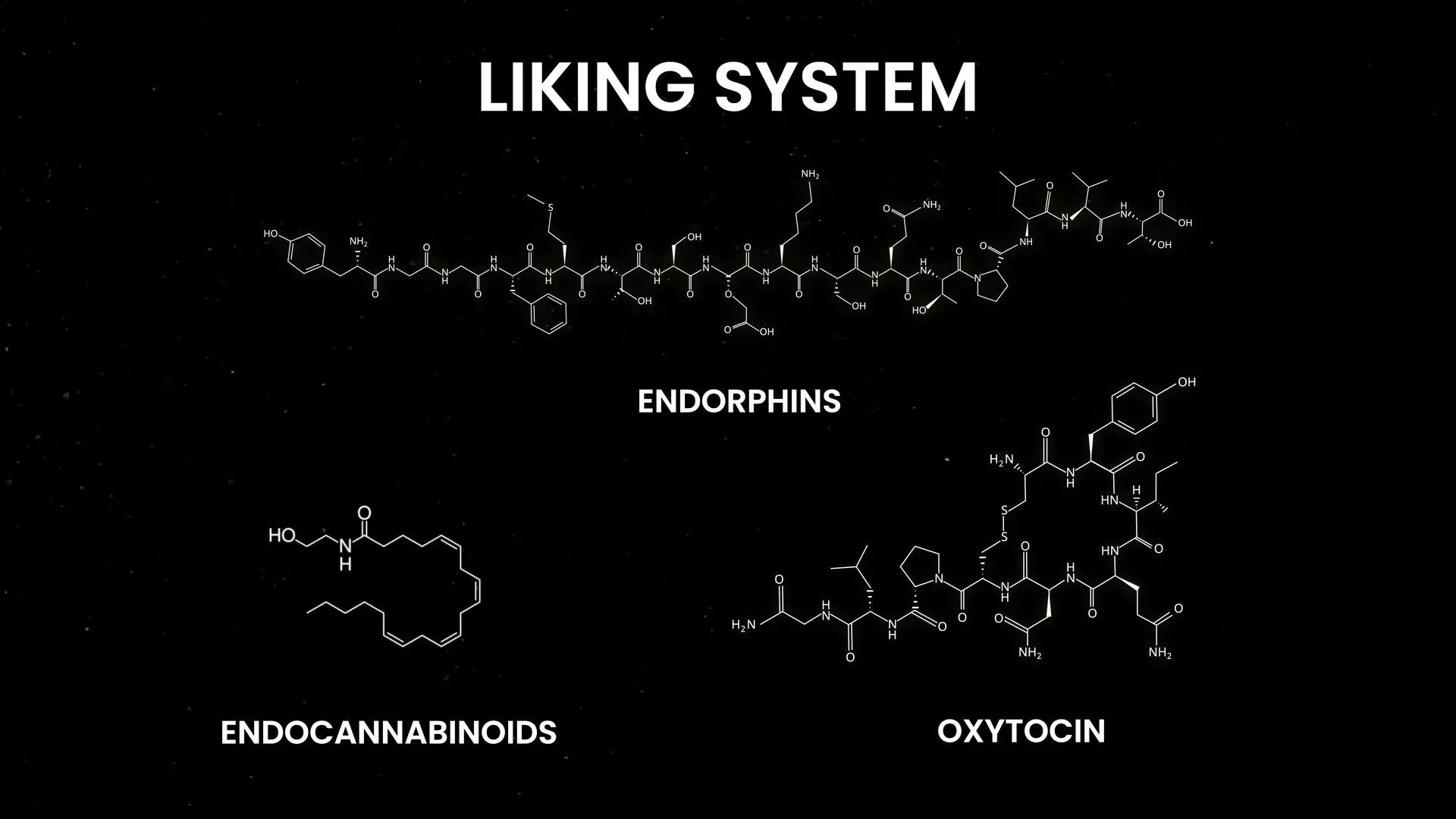
All of these activities trigger the liking system through a different set of neurochemicals. Like endorphins, endocannabinoids, and oxytocin. These chemicals are released more slowly than dopamine, but also last much longer. They dock directly into the hedonic hotspots, and the feeling they produce is far more fulfilling.910






None of these triggers work instantaneously. They require attention, time, and sometimes real effort.
The liking system produces more profound pleasure. It slowly builds up and it stays much longer. But it depends on external triggers. Without them, the pleasure does not get initiated.
Extreme Pleasure
Some people are seeking even more extreme forms of pleasure. To get the ultimate kick. Or something much simpler, like biting into a chili pepper that sets your mouth on fire.15
All of these activities begin as extreme stress or pain. The body would normally say no and floods with stress hormones like adrenaline and cortisol. Pure survival mode.14

The pleasure comes after. The moment the body realizes it has survived, the brain releases a powerful wave of endorphins and dopamine as a reward for survival. This state is often called the rush, or scientifically, the post-stress euphoria.13



Many people report it feels like the best feeling in the world, and it is why they keep coming back for more.
People experience the same thing in completely different ways. What feels like the deepest pleasure to one person can feel like pure stress to another. The signal is the same. The brain that makes the decision is not.

Collective Euphoria
But there is one form of pleasure that goes even further. One that triggers the wanting and the liking system at the same time.
The brain naturally locks onto external rhythms, especially when many people are doing the same thing at once. Like dancing on a music festival or enjoying a sports game. Scientists call this neural entrainment, and it is one of the deepest forms of unconscious connection we know.16

Several pleasure chemicals are released at once. Oxytocin floods the system, the chemical of bonding and belonging. Endorphins build up through movement, screaming and jumping. Dopamine spikes with every climax in the music or highlight in a game.17
Music itself is one of the most powerful pleasure triggers the brain knows. It is no coincidence that fans in a stadium spontaneously begin to sing together, or that thousands of people at a festival raise their hands at the same moment. Music pulls our nervous systems into alignment, and shared music multiplies the effect.


There is another important layer to this. A phenomenon known as emotional contagion. When you see thousands of euphoric faces, your own face begins to mimic them, often before you even realize it.1820
And here it gets interesting. Your brain detects your own facial expression. It registers the smile and concludes that you must be feeling the same. The collective, pleasurable feeling of the crowd becomes your emotion.19
But every form of pleasure we talked about so far has one thing in common. It depends on something outside of us to set it off. Either an external trigger or physical effort.
The Dreaming Brain
But what about dreams?
Every night your brain builds entire universes. You feel joy, fear, love, and sometimes intense pleasure.
And yet, in those moments, nothing in the outside world was actually happening. No external trigger.
But studies show that the same neurochemicals fire in the same brain regions, activated by the brain itself.2123

The pleasure was generated entirely from within.
Which brings us to the most important question of all. If pleasure can be generated this way, can we do the same while we are awake? What if the trigger could be you?22
This is not a new idea. It is one of the oldest questions humans have ever asked.

Ancient Wisdom
Long before modern neuroscience existed, people across the world were already exploring this mystery.
The Greek philosopher Epicurus made pleasure one of the main pillars of his entire philosophy. He described two very different forms of it. There is the kind we chase. The loud, intense pleasure of food, sex and possessions. It feels powerful in the moment, but it fades just as fast.
And then there is what he called "Ataraxia". A quiet, deep pleasure that arises from within and does not depend on anything outside of us.24

The Buddhists also described different qualities of pleasure, and made a distinction that has not lost its power in 2500 years. They saw that pleasure has different layers. The outer layer depends on something outside of us. It is fragile. It comes and goes with the stimulus and fades the moment the experience ends.25
But they also described a deeper layer of pleasure that arises from within. A pleasure that simply is and does not depend on anything.

The fascinating part is that they were not alone. The Stoics in ancient Rome arrived at the same conclusion. So did the Sufis in the Islamic world. The Taoists in China. And the yogic and tantric traditions of India. All described in their own language the same two forms of pleasure.26
They all arrived at the same conclusion. Pleasure from within can be trained and cultivated. And the most direct method they found to develop it is meditation.
What Meditation Really Does

What practitioners discover is surprising. Pleasure is already within us the entire time. A quiet well-being generated by the nervous system, underneath the noise of daily thinking.
Meditation is the practice of bringing attention to what is present right now. And the moment attention lands on a sensation of pleasure, that sensation grows stronger.
Modern brain imaging of meditators shows measurable activity in the same hedonic hotspots that light up during physical pleasure. Triggered from the inside by attention alone.272829
Meditation helps you to find, amplify, and eventually generate pleasure yourself. Simply by paying attention to what is already present inside you.


Mindgasm
Unfortunately, in our modern world, traditional meditation has become harder than ever. We are basically connected 24/7 to our personal pleasure dispensers that deliver shallow but immediate hits to our wanting system, anytime we want.
For many people, sitting still in silence has become almost impossible, because pleasure is simply not generated fast enough. Or in other words, there is no reward for the brain to keep going.
Most people give up before they feel the effects, even though they instinctively feel meditation would be good for them.

What if there is a meditation method built on the same insights that ancient meditators had, yet feels good immediately? One that uses a simpler access point, by focusing directly on the body's own pleasure system.
Specific muscles in your pelvic floor have some of the densest neural connections to the brain's pleasure regions, including the hedonic hotspots we talked about earlier. They contract during orgasm and physically create pleasure signals in the nervous system.30313233
With guidance and music, you can align your attention onto these muscles. By flexing them, or later just thinking of them, you create a clear, continuous rising pleasure signal your brain likes to keep focusing on.3435

What became clear over time is that this practice is, in essence, another approach of meditation. The same training of attention. Just with pleasure as the anchor.
The advantage is simple. The reward comes immediately. The body responds the moment you begin.
This method is called Mindgasm.
Bliss
There are many forms of meditation. All of them have the same goal. To reach the deepest version of pleasure. Bliss.
Whatever path you take, the message is the same.
Pleasure is always inside you. Waiting to be noticed.

Try the Mindgasm App
A guided meditation method built on everything you just read. Voice, music and structure, from your first contact with the practice to the deepest states of it.
All music featured in the film is part of the app.
7 days free · First lesson always free
Start your free trialSources & Research
Every scientific claim in the film is grounded in peer-reviewed research. Numbers in the text link to the entries below.
Chapter 2 · An Ancient Survival System
- Berridge, K. C., & Kringelbach, M. L. (2015). Pleasure Systems in the Brain. Neuron, 86(3), 646-664. cell.com
- Kringelbach, M. L., & Berridge, K. C. (2010). The Neuroscience of Happiness and Pleasure. Social Research, 77(2), 659-678. pmc.ncbi.nlm.nih.gov
Chapter 3 · How Pleasure Actually Works
- Berridge, K. C., & Kringelbach, M. L. (2013). Neuroscience of affect: brain mechanisms of pleasure and displeasure. Current Opinion in Neurobiology, 23(3), 294-303. pubmed.ncbi.nlm.nih.gov
- Smith, K. S., & Berridge, K. C. (2007). Opioid Limbic Circuit for Reward: Interaction between Hedonic Hotspots of Nucleus Accumbens and Ventral Pallidum. Journal of Neuroscience, 27(7), 1594-1605. jneurosci.org
- Berridge Lab, University of Michigan. Neuroscience of Liking and Wanting. sites.lsa.umich.edu
Chapter 5 · The Wanting System
- Berridge, K. C., & Robinson, T. E. (2016). Liking, Wanting, and the Incentive-Sensitization Theory of Addiction. American Psychologist, 71(8), 670-679. PDF
- Berridge, K. C. (2007). The debate over dopamine's role in reward: the case for incentive salience. Psychopharmacology, 191(3), 391-431. pubmed.ncbi.nlm.nih.gov
- Berridge, K. C., Robinson, T. E., & Aldridge, J. W. (2009). Dissecting components of reward: 'liking', 'wanting', and learning. Current Opinion in Pharmacology, 9(1), 65-73. pmc.ncbi.nlm.nih.gov
Chapter 6 · The Liking System
- Peciña, S., & Berridge, K. C. (2005). Hedonic hot spot in nucleus accumbens shell: where do mu-opioids cause increased hedonic impact of sweetness? Journal of Neuroscience, 25(50), 11777-11786. jneurosci.org
- Mahler, S. V., Smith, K. S., & Berridge, K. C. (2007). Endocannabinoid hedonic hotspot for sensory pleasure. Neuropsychopharmacology, 32(11), 2267-2278. pubmed.ncbi.nlm.nih.gov
- Boecker, H., et al. (2008). The runner's high: opioidergic mechanisms in the human brain. Cerebral Cortex, 18(11), 2523-2531. pubmed.ncbi.nlm.nih.gov
- Dietrich, A., & McDaniel, W. F. (2004). Endocannabinoids and exercise. British Journal of Sports Medicine, 38(5), 536-541. pmc.ncbi.nlm.nih.gov
Chapter 7 · Extreme Pleasure
- Sprouse-Blum, A. S., et al. (2010). Understanding endorphins and their importance in pain management. Hawaii Medical Journal, 69(3), 70-71. pmc.ncbi.nlm.nih.gov
- Bloomfield, M. A. P., et al. (2019). The effects of psychosocial stress on dopaminergic function and the acute stress response. eLife, 8, e46797. elifesciences.org
- Rozin, P., Guillot, L., Fincher, K., Rozin, A., & Tsukayama, E. (2013). Glad to be sad, and other examples of benign masochism. Judgment and Decision Making, 8(4), 439-447. PDF
Chapter 8 · Collective Euphoria
- Nozaradan, S. (2014). Exploring how musical rhythm entrains brain activity with electroencephalogram frequency-tagging. Philosophical Transactions of the Royal Society B, 369(1658). royalsocietypublishing.org
- Salimpoor, V. N., et al. (2011). Anatomically distinct dopamine release during anticipation and experience of peak emotion to music. Nature Neuroscience, 14(2), 257-262. nature.com
- Hatfield, E., Cacioppo, J. T., & Rapson, R. L. (1993). Emotional Contagion. Current Directions in Psychological Science, 2(3), 96-100. journals.sagepub.com
- Hatfield, E., Bensman, L., Thornton, P. D., & Rapson, R. L. (2014). New Perspectives on Emotional Contagion: A Review of Classic and Recent Research on Facial Mimicry and Contagion. Interpersona, 8(2), 159-179. interpersona.psychopen.eu
- Dimberg, U., Thunberg, M., & Elmehed, K. (2000). Unconscious facial reactions to emotional facial expressions. Psychological Science, 11(1), 86-89. pubmed.ncbi.nlm.nih.gov
Chapter 9 · The Dreaming Brain
- Perogamvros, L., & Schwartz, S. (2012). The roles of the reward system in sleep and dreaming. Neuroscience & Biobehavioral Reviews, 36(8), 1934-1951. pubmed.ncbi.nlm.nih.gov
- Perogamvros, L., Dang-Vu, T. T., Desseilles, M., & Schwartz, S. (2013). Sleep and dreaming are for important matters. Frontiers in Psychology, 4, 474. pmc.ncbi.nlm.nih.gov
- Solms, M. (2000). Dreaming and REM sleep are controlled by different brain mechanisms. Behavioral and Brain Sciences, 23(6), 843-850. pubmed.ncbi.nlm.nih.gov
Chapter 10 · Ancient Wisdom
- Epicurus. Letter to Menoeceus (ca. 300 BCE). Translated in: Long, A. A., & Sedley, D. N. (1987). The Hellenistic Philosophers. Cambridge University Press.
- Bhikkhu Bodhi (2005). In the Buddha's Words: An Anthology of Discourses from the Pali Canon. Wisdom Publications.
- Kringelbach, M. L., & Berridge, K. C. (2017). The Affective Core of Emotion: Linking Pleasure, Subjective Well-Being, and Optimal Metastability in the Brain. Emotion Review, 9(3), 191-199. pmc.ncbi.nlm.nih.gov
Chapter 11 · What Meditation Really Does
- Hagerty, M. R., et al. (2013). Case study of ecstatic meditation: fMRI and EEG evidence of self-stimulating a reward system. Neural Plasticity, 2013, 653572. pmc.ncbi.nlm.nih.gov
- Fox, K. C. R., et al. (2016). Functional neuroanatomy of meditation: A review and meta-analysis of 78 functional neuroimaging investigations. Neuroscience & Biobehavioral Reviews, 65, 208-228. pubmed.ncbi.nlm.nih.gov
- Boccia, M., Piccardi, L., & Guariglia, P. (2015). The Meditative Mind: A Comprehensive Meta-Analysis of MRI Studies. BioMed Research International, 2015, 419808. pmc.ncbi.nlm.nih.gov
Chapter 12 · Mindgasm
- Holstege, G., & Huynh, H. K. (2011). Brain circuits for mating behavior in cats and brain activations and de-activations during sexual stimulation and ejaculation and orgasm in humans. Hormones and Behavior, 59(5), 702-707. pubmed.ncbi.nlm.nih.gov
- Holstege, G. (2016). How the Emotional Motor System Controls the Pelvic Organs. Sexual Medicine Reviews, 4(4), 303-328. academic.oup.com
- Asavasopon, S., et al. (2014). Cortical Activation Associated with Muscle Synergies of the Human Male Pelvic Floor. Journal of Neuroscience, 34(41), 13811-13818. jneurosci.org
- Yani, M. S., et al. (2018). Distributed representation of pelvic floor muscles in human motor cortex. Scientific Reports, 8, 7213. pmc.ncbi.nlm.nih.gov
- Wise, N. J., Frangos, E., & Komisaruk, B. R. (2017). Brain Activity Unique to Orgasm in Women: An fMRI Analysis. Journal of Sexual Medicine, 14(11), 1380-1391. pubmed.ncbi.nlm.nih.gov
- Whipple, B., Ogden, G., & Komisaruk, B. R. (1992). Physiological correlates of imagery-induced orgasm in women. Archives of Sexual Behavior, 21(2), 121-133. pubmed.ncbi.nlm.nih.gov
All music featured in the film is from the Mindgasm App · Listen to the playlist