
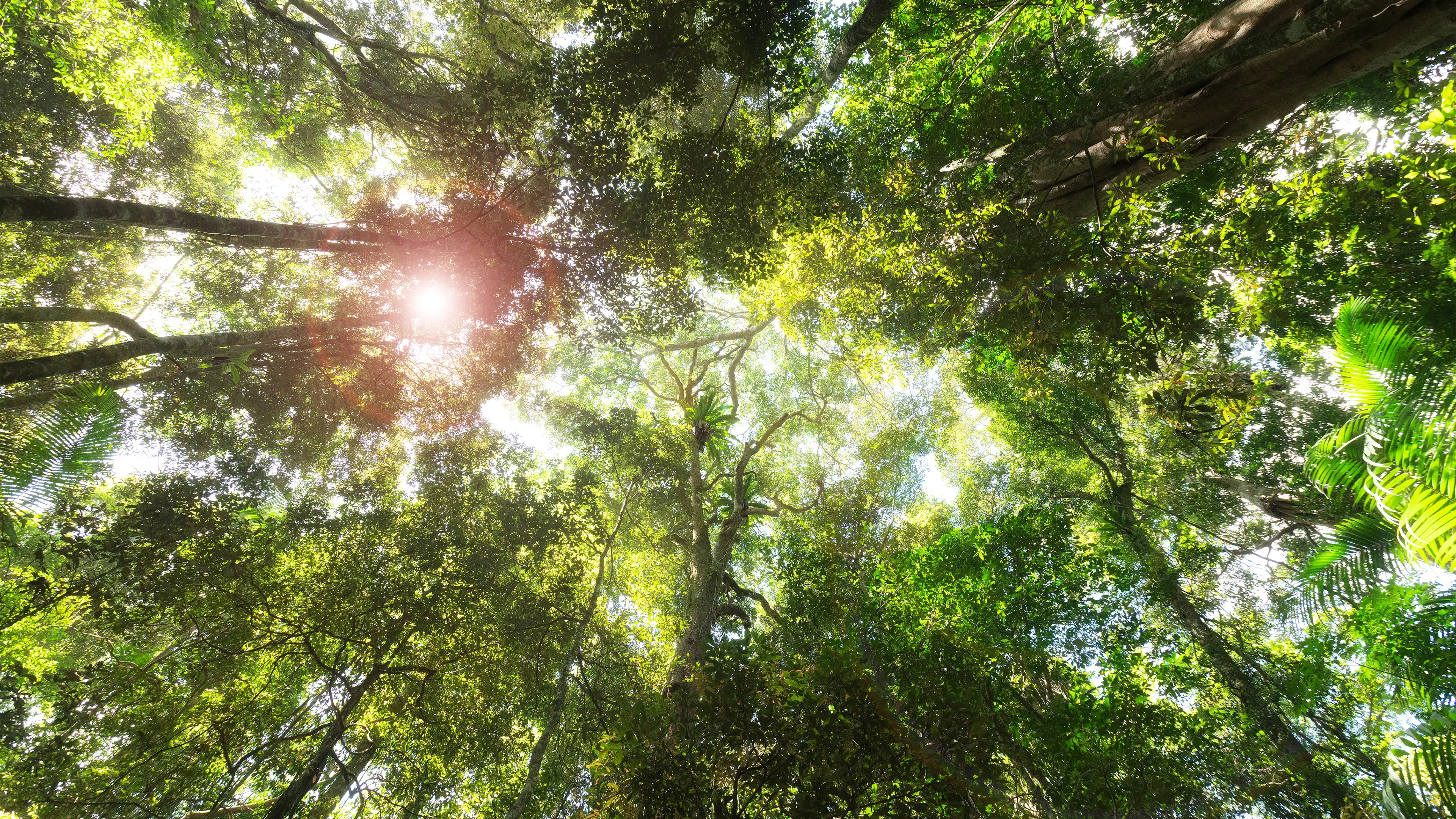
Forest Bathing
Shinrin-Yoku - The Meditation of Immersion
This is part of our “Break or Repeat” series – a collection of practices you can explore during your breaks from Mindgasm training. Forest Bathing is a form of mindfulness meditation that complements and deepens your journey – practiced not on a cushion, but under trees.
The Japanese Root: Shinrin-Yoku
In the 1980s, the Japanese government recognized a problem: increasing urbanization and technological stress were leading to an epidemic of exhaustion, depression, and cardiovascular diseases. The answer didn’t come from the pharmaceutical industry, but from the forest.
Shinrin-Yoku (森林浴) literally means “forest bath” or “bathing in the forest atmosphere.” It’s not a sporting activity like hiking or jogging – it’s the conscious, slow immersion in the presence of the forest with all senses.
The Japanese government invested in decades of scientific research and even established official “forest therapy trails” throughout the country. The results were clear: people who regularly practice Shinrin-Yoku show:
– Reduced cortisol (stress hormone)
– Lower heart rate and blood pressure
– Strengthened immune system
– Improved mood and mental clarity
– Increased parasympathetic activity (the “rest & digest” mode of the nervous system)
This last point is particularly relevant for Mindgasm practitioners: The parasympathetic state is exactly what you need for deep Mindgasm sessions.
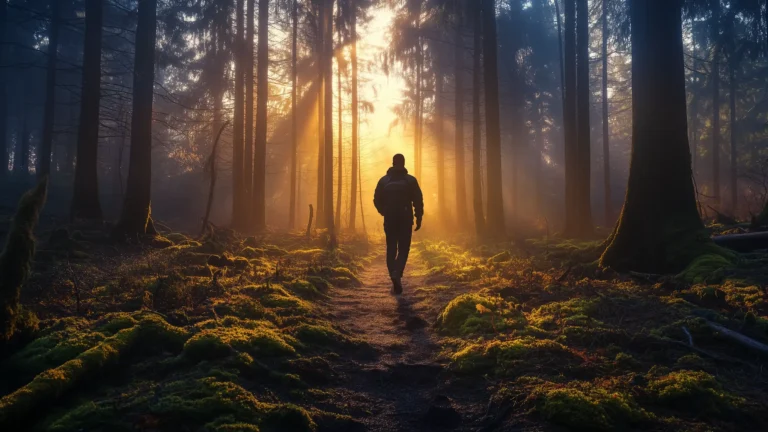
What Forest Bathing is NOT
Before we dive deeper, let’s clarify what Shinrin-Yoku is not:
- ❌ Not exercise – You’re not trying to make kilometers or burn calories
- ❌ No destination – There’s no summit to reach, no route to check off
- ❌ No distraction – Headphones, podcasts, phone calls are taboo
- ❌ No hurry – 2-3 km in 2-3 hours is normal
Forest bathing is the opposite of our achievement culture. It is purposeless being.
How to Practice Forest Bathing
1. Preperation
Choose your forest: It doesn’t have to be a wild primeval forest. A city park with old trees is sufficient. Optimal are mixed deciduous forests with little human traffic. If possible, choose a location with flowing water (stream, river) – the sound amplifies the meditative effect.
Timing: Early morning or late afternoon are ideal. The light is soft, the air is fresh, and you’ll meet fewer people. Plan at least 1-2 hours – not because you need that long, but because you should not rush.
What you need:
– Comfortable clothing (not performance sportswear, rather soft, natural fabrics)
– Shoes that are quiet (you want to hear your own steps)
– Perhaps a sitting pad
– No phone (or in airplane mode deep in your bag)
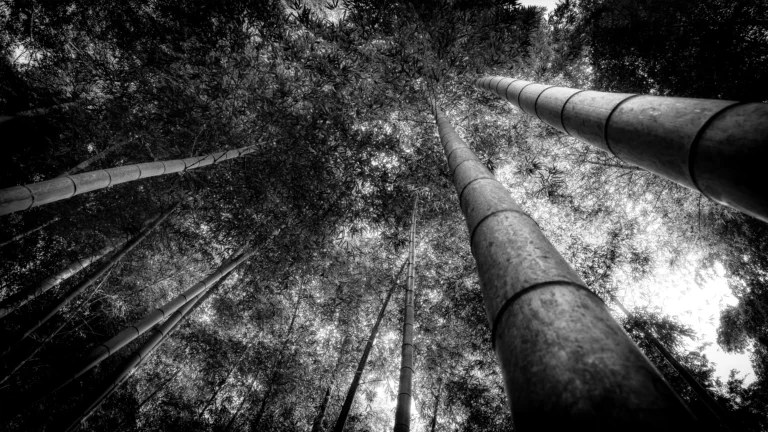
2. The entry
Stand at the forest edge. Take three conscious breaths.
Tell yourself (internally or aloud): “I have nothing to achieve. I am here to receive.”
Then enter the forest – slowly, as if entering an old friend’s house.
3. The First 10 Minutes: Arriving
Walk very slowly. Bring your attention to your breath – not to control it, but simply to notice it.
Let your breathing find its own rhythm as you move. Some people naturally synchronize breath and steps, others don’t. Both are fine.
Notice how the sound changes as soon as you’re under the trees. The outside world becomes quieter. The forest has its own acoustics – more muffled, fuller.

4. Opening the Five Senses
Unlike pure walking meditation, forest bathing consciously activates all five senses:
SEEING
Don’t just look straight ahead at the path. Let your gaze wander:
- Upward: How light falls through the leaves
- To the side: The textures of tree bark
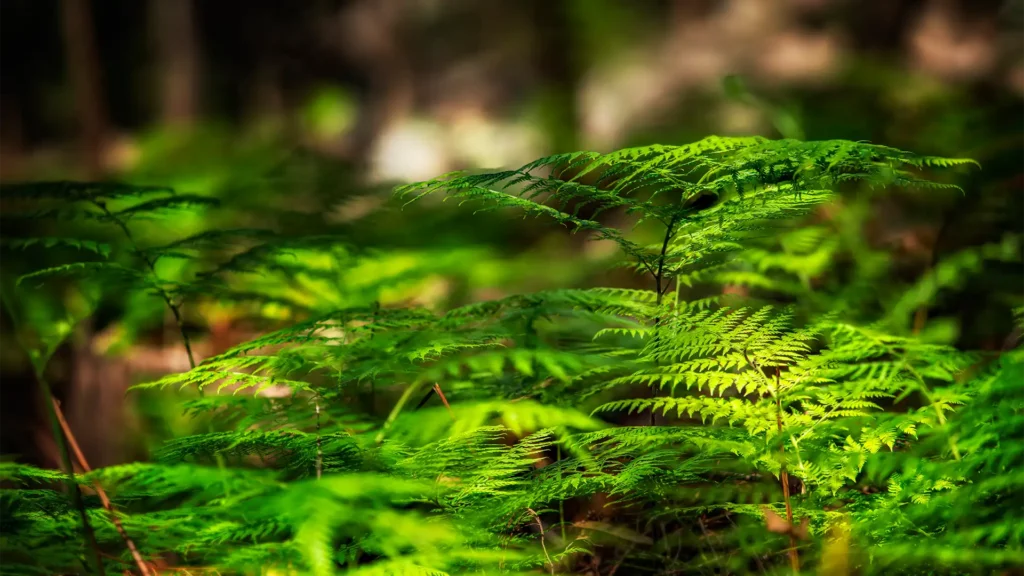
- Downward: Moss, ferns, mushrooms
- Into depth: How far can you see between the trees?
Notice the color gradations. There isn’t just “green” – there are 50 shades of green, from almost-yellow to almost-black
HEARING
Close your eyes for 2 minutes. Listen to:
- Wind in the leaves (each tree sounds different)
- Bird calls (near and far)
- Your own footsteps
- Water, if present
- The silence between sounds
The forest is never truly silent – but the quality of sounds is completely different from the city. It’s “active silence.”
SMELLING
The smell of the forest isn’t just pleasant – it’s healing. Trees, especially conifers, release phytoncides – organic compounds that strengthen your immune system.
Breathe in consciously and deeply:
- The earthy smell of moist soil
- The resinous scent of pines
- The fresh smell after rain
- The sweet scent of blooming elderberry
FEELING
Touch things:
- Tree bark (rough, soft, scaly?)
- Moss (moist, springy)
- Leaves (smooth, serrated, fuzzy?)
- Feel the ground under your feet – do you feel roots, stones?
If you’re brave: Take off your shoes. Walk barefoot on forest floor. This direct grounding (in the literal sense) deepens the parasympathetic effect enormously.
TASTING
This is subtle but real: The air in the forest tastes different. Breathe through your slightly open mouth and notice the “taste” of the moist, oxygen-rich air.
(If you know edible plants you may sample. But this is optional.)
FOR THE EXPERIENCED
If you’re already practiced with Mindgasm, try forest bathing with active Source awareness. Go to the forest as described – but maintain a very light, constant awareness on your Source . Don’t contract, just feel.

5. The Dwelling
After about 30 minutes of slow walking, find a place to sit or stand:
- A fallen tree trunk
- A large stone
- Simply on the ground
Sit or stand for 15-30 minutes without movement.
Do nothing.
Observe:
- How light moves through the leaves
- How your breath deepens without you controlling it
- How thoughts come and go like clouds
- How your nervous system downregulates
This is the core of forest bathing: Presence without intention.
6. The Return
When you’re ready to leave, stand up slowly.
Thank the forest (internally or aloud – it may sound strange, but it closes the experience).
Walk back – but try to maintain the quality of attention.
Don’t immediately drive home and scroll through your phone. Give yourself 10 minutes of transition – perhaps a tea, sitting on a bench.
The Connection to Mindgasm
1. Training Your Nervous System
Mindgasm only works when your nervous system is in parasympathetic mode – relaxed, open, receptive. Forest bathing is like a reset button for your autonomic nervous system. It trains exactly this state.
Many practitioners report: After a forest bathing day, the next Mindgasm session works more effortlessly. The pleasure waves come faster, are stronger, flow more easily. Your body remembers the deep relaxation from the forest and can access it more quickly during your practice.
2. Sharpening Your Senses
In the forest you learn to perceive subtle stimuli: the light pressure of a breeze on your skin, the minimal change in scent, the distant rustling of an animal.
This sensory fine-tuning transfers directly to your body awareness. If you can distinguish the texture of tree bark, you can also distinguish between Level 1 and Level 2 contractions of your Source. The same attention you give to the shifting patterns of light through leaves is the attention you need to catch the first whisper of a P-wave.
3. Letting Go of Achievement
The biggest hurdle in Mindgasm is wanting. “I want an Super-O. I want to do it right. I want progress.”
Forest bathing teaches the opposite: Receiving instead of achieving.
In the forest there’s nothing to achieve. You can’t forest bathe “well” or “badly.” You’re simply there. This attitude – this letting go of performance pressure – is the key to Lesson 6-9. When you learn to simply be in the forest without agenda, you learn to simply be in your body without forcing pleasure.
The forest teaches you what Mindgasm requires:
how to receive without grasping, how to feel without forcing.
What you learn under the trees, you carry into your sessions.